
How to touch up wall paint without it showing
Why touch-ups leave shiny patches, and how to fix it: match color and sheen, use less paint, feather the edges and pick brush vs. roller.
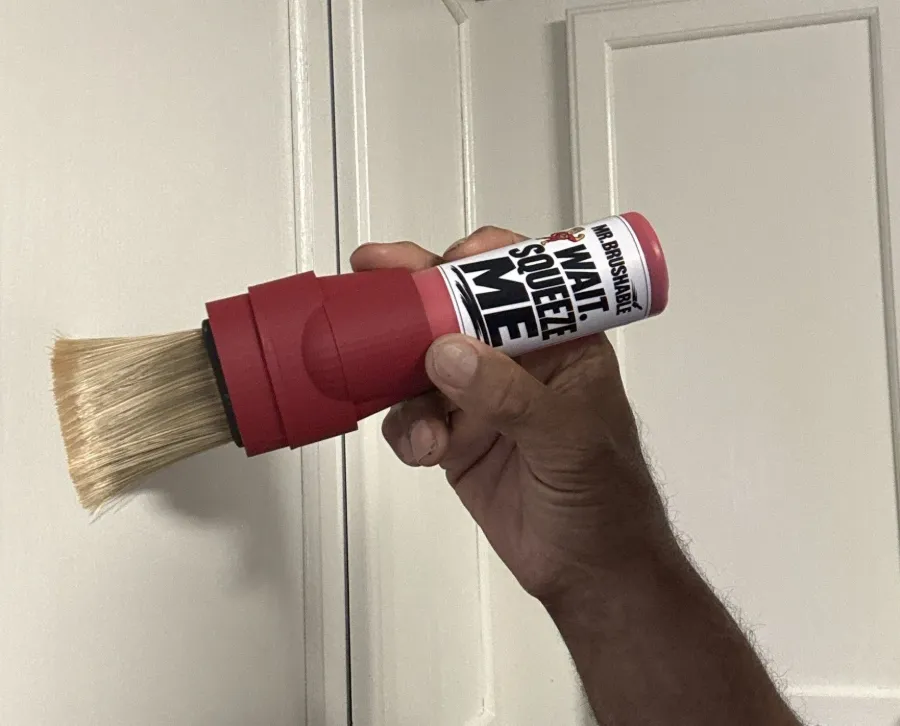
You dab paint on a scuff, it dries, and now there's a patch that's more noticeable than the scuff ever was. Painters call it "flashing." It's fixable, and it almost always comes down to one of five things.
1. Match the color exactly
2. Match the sheen
Sheen matters as much as color. Walls are usually flat or eggshell. Trim, doors and cabinets are usually semi-gloss. Semi-gloss paint on a flat wall will catch the light and show, even in the perfect color.
3. Use less paint than you think
A thick blob dries raised and shiny. Use a light coat and add a second thin coat if needed.
4. Feather the edges
Don't paint a neat square. Brush or roll lightly past the mark and soften the edges outward so there's no line where new paint meets old.
5. Use the right tool
-
Brush
for small chips, edges, trim, corners and next to light switches. Brush bottle → -
Roller
for larger scuffs on flat walls; a roller texture blends better with rolled walls. Roller bottle →
Special cases
Marker, crayon or water stains:
Nail holes or dents:
Cabinets and trim:
Always test first
Try a small spot somewhere hidden, like behind a door, and let it dry fully before judging. Paint often looks different wet than dry.
Squeeze. Brush. Done.
Touch-up paint with the brush built into the bottle, from $8.99. Free U.S. shipping on orders $25+.